- the weekly swarm
- Posts
- Copilot Studio, Vertex AI and Azure AI Foundry are Low Code Solutions
Copilot Studio, Vertex AI and Azure AI Foundry are Low Code Solutions
Faster prototypes, fewer bottlenecks, and results your stakeholders can actually use.

Mike West
September 24, 2025
In partnership with

Become An AI Expert In Just 5 Minutes

If you’re a decision maker at your company, you need to be on the bleeding edge of, well, everything. But before you go signing up for seminars, conferences, lunch ‘n learns, and all that jazz, just know there’s a far better (and simpler) way: Subscribing to The Deep View.
This daily newsletter condenses everything you need to know about the latest and greatest AI developments into a 5-minute read. Squeeze it into your morning coffee break and before you know it, you’ll be an expert too.
Subscribe right here. It’s totally free, wildly informative, and trusted by 600,000+ readers at Google, Meta, Microsoft, and beyond.
Hello everyone and welcome to my newsletter where I discuss real-world skills needed for the top data jobs and specifically the AI Agent Role. 👏
This week we discuss the rise of the low code agentic interfaces.
Not a subscriber? Join the informed. Over 200K people read my content monthly.
Thank you. 🎉
A decade ago, if you had a startup idea, there were only two ways to bring it to life: learn to code or hire developers. Both were expensive, time-consuming, and often intimidating. Fast-forward to today, and things look very different.
Welcome to the world of No-Code and Low-Code platforms, a movement that’s not just a passing trend but a fundamental shift in how we create software.
We know that the majority of real-world agents are built in the cloud. The ones that are working anyway. Guess what? The big three cloud providers all have low code AI Agent interfaces as their primary mechanism for assembling agents.
I love Python. However, if we’re honest, half of the work that blocks insight isn’t hard modeling — it’s setup, glue code, and why won’t my library install? Low-code tools turned that friction into drag-and-drop steps, pushed models closer to the business, and — surprise — left Python for the problems that truly need it.
Low-code tools turned that friction into drag-and-drop steps, pushed models closer to the business.
Low codes doesn’t mean “no code, ever.” It means less custom code and more governed building blocks that handle the 80%: data prep, quality checks, feature engineering, AutoML, approvals, and deployment. You still apply statistical judgment and product sense; you just spend less time chasing environments and more time shaping decisions.
Let’s clear up the buzzwords first.
No-Code Platforms: Tools that allow people with zero coding experience to create apps, websites, or automations through drag-and-drop interfaces, visual workflows, and pre-built templates. Examples: Bubble, Webflow, Glide, Zapier.
Low-Code Platforms: Tools designed for developers who still want flexibility but want to build much faster. These platforms combine visual interfaces with the ability to add custom code. Examples: OutSystems, Microsoft Power Apps, Google’s Vertex, AI Studio, Copilot and AI Foundry.
Think of it this way: no-code empowers non-technical users, low-code accelerates developers. Together, they’re democratizing software development.
Think of it this way: no-code empowers non-technical users, low-code accelerates developers.
This isn’t just niche. The growth numbers are staggering:
The global low-code/no-code market was valued at $16.3 billion in 2021 and is projected to hit $187 billion by 2030 (Fortune Business Insights).
Gartner predicts that by 2025, 70% of new enterprise applications will be built using no-code or low-code technologies.
Forrester reports that companies adopting low-code tools cut development time by up to 70%.
The global low-code/no-code market was valued at $16.3 billion in 2021 and is projected to hit $187 billion by 2030
This means more companies are asking a simple question: Why hire a team of 10 engineers when two product people can ship faster with no-code?
Most of you follow me know my decision to teach Copilot Studio and Fabric has nothing to do with like-ability. It’s all about the numbers.
The top cloud in the near future will likely be Azure. (Reference)
Fabric, Microsoft’s data centric ecosystem is being deployed in 80% of Fortune 500 Companies. (Reference)
Approximately 85% of Fortune 500 Companies are using Microsoft for their AI. (Reference)
Copilot Studio has been used by more than 230,000 organizations and 90% of Fortune 500, including Eneco, BD Columbia, Walmart, The Estee Lauder Companies Inc., Grupo Bimbo, T-Mobile, and Virgin Money. (Reference)
The hype isn’t just about saving money — it’s about shifting control.
Accessibility: Non-technical people can finally build.
Speed: Weeks of coding compressed into days.
Empowerment: Teams don’t need to wait on IT.
Cost Reduction: No need for huge dev teams to build simple tools.
For developers, low-code isn’t competition — it’s relief. Nobody enjoys rewriting the same CRUD app for the tenth time. Low-code handles repetitive work so engineers can focus on architecture, AI, or performance optimization.
For developers, low-code isn’t competition — it’s relief.
As one developer joked from Google:
“Low-code doesn’t steal my job — it takes away the boring parts of it.”
Traditional developers have fair criticisms:
Scalability Issues: No-code apps may struggle with millions of users.
Vendor Lock-in: You’re tied to the platform’s ecosystem.
Customization Limits: Complex logic sometimes requires hand-written code.
And they’re right — if you’re building the next Spotify, you’ll outgrow no-code. But for 80% of business use cases (internal dashboards, MVPs, workflow automation), no-code is more than enough.
In many ways, this mirrors the WordPress revolution of the 2000s. Developers scoffed at drag-and-drop website builders, but today, WordPress powers 43% of the web.
Consider this case study: a solo founder in New York built a prototype for a mental health app entirely on Bubble in under 3 months. She used Stripe for payments, Twilio for messaging, and Airtable for data storage. The app gained 1,500 paying users before she hired her first developer. In the past, this would have required $50,000–$100,000 in developer costs. With no-code, she did it for under $500 in platform fees.
Stories like this are why investors now encourage early-stage founders to validate ideas with no-code before raising money.
No-code and low-code platforms aren’t about replacing coding — they’re about expanding who gets to build.
For startups, they mean faster MVPs.
For enterprises, they mean less IT backlog.
For individuals, they mean independence and creativity.
The future won’t be code vs. no-code. It will be hybrid — a world where developers, designers, and non-tech folks collaborate seamlessly, aided by no-code platforms and AI assistants.
A career as an AI Agent Engineer on any of the top cloud platforms using only low coding solutions is real. You want to be an Agent Engineer on Fabric? Start learning prompt engineering and the basics of generative artificial intelligence and worry less about development skills.
I’d also like to thank all of you or reading and commenting on YouTube about my newsletter. This helps me gain readers. So, thank you so much.
Thanks for reading and have a great day. 👏
I’ve put together an introductory course on mastering the basics of Copilot Studio for those who are thinking about becoming an agent engineer on Microsoft’s ecosystem. For this article only get 50% off the entire platform including the agent course by using the code YOUTUBE25 at checkout. I’ll take this away in a few days so hurry.
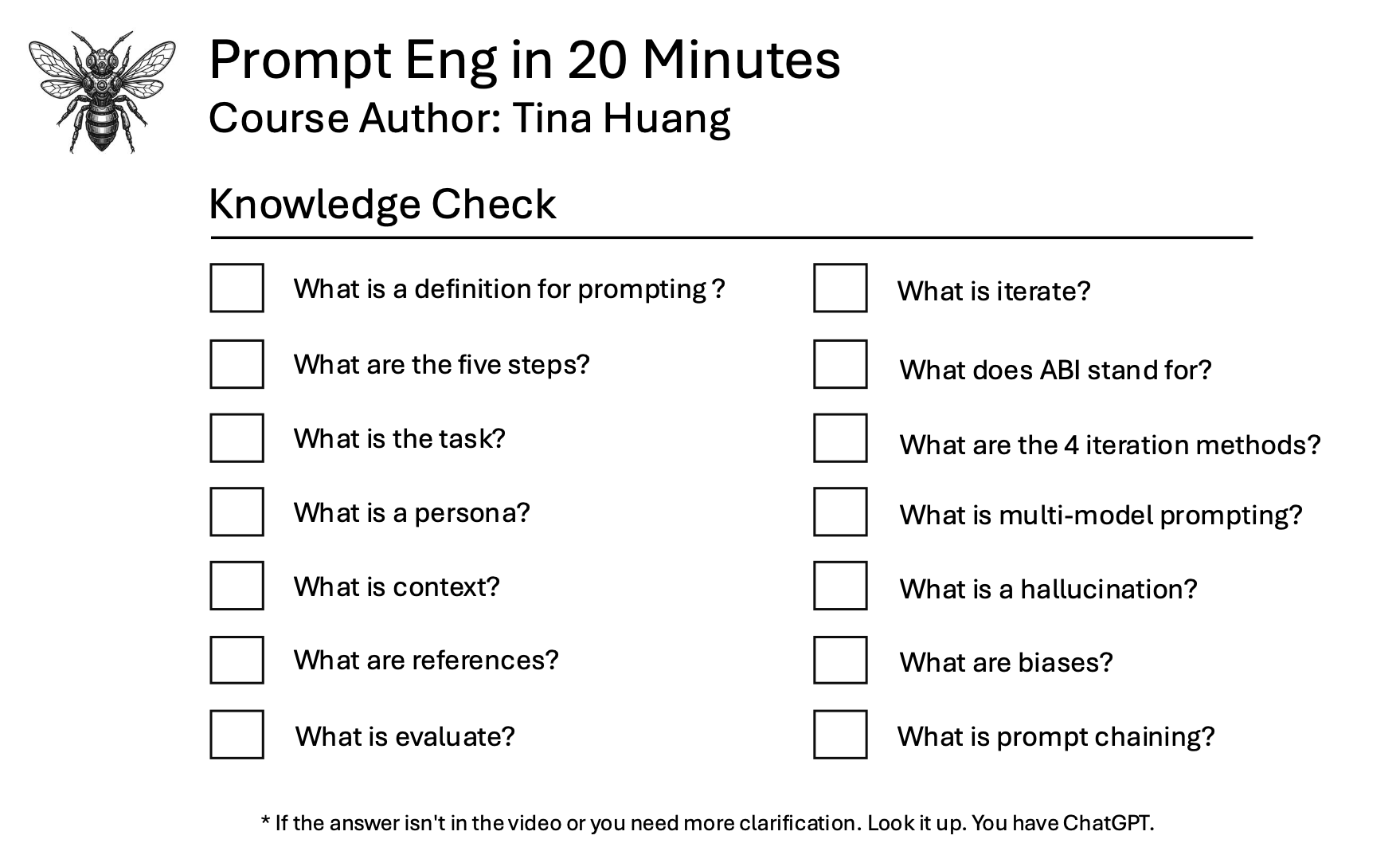
I’m using content from around the globe that does the best job of explaining the concept. I’m also outlining the information you need to take away from the video. An example of this is below. These are must know questions and concepts. I’m also working on a complete course for Copilot Studio and then one for AI Foundry. Microsoft is going to dominate the agent space and I want you to be prepared for these roles using either interface.
Course on Agents